


If you've been lying awake worrying that AI is coming for your job, I've got good news and complicated news. The good news first: you've probably been worrying about the wrong thing. The complicated news is that understanding what's actually happening requires looking past the headlines that keep screaming about robots stealing everyone's jobs.
I've spent the last few weeks digging into the research that most tech journalists seem to have missed. And honestly, what I found surprised me. Oxford Economics just dropped a research briefing that should be required reading for anyone who's felt that knot in their stomach every time they see another "AI replacing workers" headline. The data tells a different story, and it's one that most people haven't heard yet.
Here's what we're going to unpack: why companies love blaming AI for layoffs (spoiler: it makes them look smart to investors), what's actually driving job cuts, and what this means for Australian workers specifically. I'm not going to pretend everything's fine. There are legitimate concerns we shouldn't dismiss. But the panic? The "AI is coming for everyone" narrative? That needs some serious fact-checking.
The Number That Should Calm You Down (A Little)
Let's start with the headline figure that made me do a double-take. According to Oxford Economics' analysis of layoff announcements, AI was cited as the reason for just 4.5% of US job cuts in the first 11 months of 2025 (Fortune, 2026). That's roughly 55,000 jobs out of over 1.2 million total announced layoffs.

Now, 55,000 jobs isn't nothing. I'm not dismissing those losses. But here's the context that changes everything: "market and economic conditions" was cited for 245,000 job losses. That's four times more than AI (Workplace Insight, 2026). When you zoom out further, the US labour market sees 1.5 to 1.8 million workers lose jobs every month through normal turnover (Bureau of Labor Statistics, 2025). Against that backdrop, the AI-attributed cuts are a rounding error.
Oxford Economics didn't just look at the numbers, though. They looked at what should be happening if AI really were replacing workers at scale. Here's where it gets interesting: if companies were genuinely automating work away, productivity growth should be accelerating. Instead, productivity growth across major advanced economies has remained weak and volatile (Workplace Insight, 2026). That's a pretty significant tell.
Professor Peter Cappelli from Wharton made an observation that stuck with me: "The headline is, 'It's because of AI,' but if you read what they actually say, they say, 'We expect that AI will cover this work.'" (Fortune, 2026). That's a crucial distinction. Expecting AI to eventually do something isn't the same as AI actually doing it now.
The methodology here matters. Challenger, Gray & Christmas has been tracking layoff announcements for decades. They started categorising "AI" as a layoff reason in 2023. Their data shows 71,825 jobs have been attributed to AI since then, with over 75% of those coming in 2025 alone (Challenger, Gray & Christmas, 2025). But here's what the data also shows: restructuring, store closures, and cost-cutting each account for more job losses than AI does.
Why Companies Love Blaming AI
Here's where I'm going to get a bit cynical, because I think the evidence warrants it. Oxford Economics suspects something that's been nagging at me for a while now: "We suspect some firms are trying to dress up layoffs as a good news story rather than bad news, such as past over-hiring" (Fortune, 2026).
Think about it from a company's perspective. You've got two ways to explain cutting 10,000 jobs:
Option A: "We over-hired during the pandemic, demand is softening, and we need to cut costs because we made some mistakes."
Option B: "We're investing in AI and becoming more efficient. This positions us for the future."

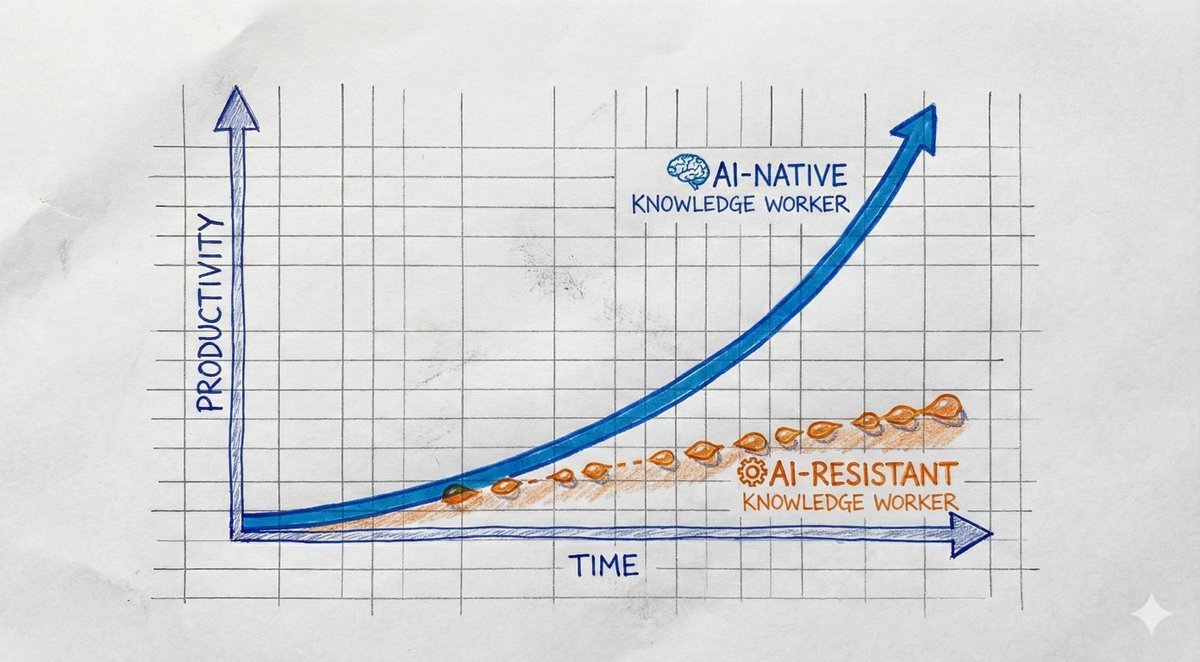
Which one do you think plays better in the investor call? MIT economics professor David Autor put it bluntly in an email to NBC News: "It's much easier for a company to say, 'We are laying workers off because we're realizing AI-related efficiencies' than to say 'We're laying people off because we're not that profitable or bloated, or facing a slowing economic environment.'" (NBC News, 2025).
Autor went further, suggesting that "whether or not AI were the reason, you'd be wise to attribute the credit/blame to AI." That's a fairly damning assessment from someone who's spent their career studying technology and labour markets.
Jackson Ader, an analyst at KeyBanc Capital, called it out even more directly: "No matter what the current state of the company, the narrative is negative and just about impossible to disprove" (NBC News, 2025). AI has become the perfect corporate scapegoat: futuristic enough to sound strategic, vague enough to resist scrutiny.
The Klarna case is particularly instructive. CEO Sebastian Siemiatkowski publicly announced that AI was doing the work of 700 customer service employees. It made headlines everywhere. What got less coverage was what happened next: customer complaints increased, satisfaction ratings dropped, and the company is now quietly rehiring humans (Reworked, 2025). Siemiatkowski eventually admitted that "what you end up having is lower quality" (MLQ AI, 2025).

Forrester Research's 2026 Predictions report contains a stat that made me laugh, then wince: 55% of employers report regretting laying off workers because of AI (HR Executive, 2025). Half of AI-attributed layoffs will be quietly rehired, Forrester predicts, often offshore or at significantly lower salaries. It's not AI replacing workers. It's companies making bad decisions and using AI as cover.
What's Actually Behind the Layoffs
If AI isn't the main driver, what is? The answer is boring but important: the same things that have always driven layoffs.
The US saw 1.17 million job cuts in 2025, the highest level since the COVID-19 pandemic in 2020 (The Hill, 2026). But look at the breakdown from Challenger, Gray & Christmas. DOGE actions (government restructuring) led with 293,753 layoffs. Store and department closings accounted for 191,480. Market and economic conditions claimed 253,206. Restructuring hit 133,611 (Challenger, Gray & Christmas, 2025).
AI's 54,836? It's barely in the top five reasons.
The tech sector specifically has been dealing with a hangover from pandemic-era hiring binges. IBM's CEO Arvind Krishna called it "a natural correction," pointing out that "people gorged on employment... Some of the displacement is just people saying, 'I don't need so many people because I went up 30, 40, 50, 100% from 2020 to 2023'" (Tech Startups, 2025).
The numbers back this up. Between 2019 and 2022, major tech companies nearly doubled their headcounts. Amazon, Google, Microsoft, Meta, they all went on hiring sprees. Now they're correcting (Information Week, 2025). The Bay Area added 74,700 tech jobs between 2020 and 2022, then cut 80,200 tech jobs in 2023 and 2024, wiping out all the pandemic gains and more (Wolf Street, 2025).
Federal Reserve Chair Jerome Powell has been notably hesitant to blame AI. At a December 2025 press conference, he acknowledged monitoring AI's impact but said "it's not a big part of the story yet" (The Street, 2025). The Fed's concern is broader: job creation has slowed to near-zero in many sectors, but that's attributable to interest rates, economic uncertainty, and the general post-pandemic normalisation.
Test Your Site's AI Readiness
See exactly how AI agents view your website with our free analysis tool.
The Valid Concerns We Shouldn't Dismiss
Here's where I need to pump the brakes on the reassurance. Just because the current AI layoff narrative is overblown doesn't mean there aren't real concerns worth taking seriously.

The entry-level job pipeline is genuinely concerning. A Stanford study found workers aged 22 to 25 experienced a 6% decline in employment in AI-exposed occupations between 2022 and 2025, while older workers in the same roles saw 6-9% growth (Stanford Digital Economy Lab, 2025). The number of fresh graduates hired by big tech globally has dropped more than 50% over three years (SignalFire, 2025).

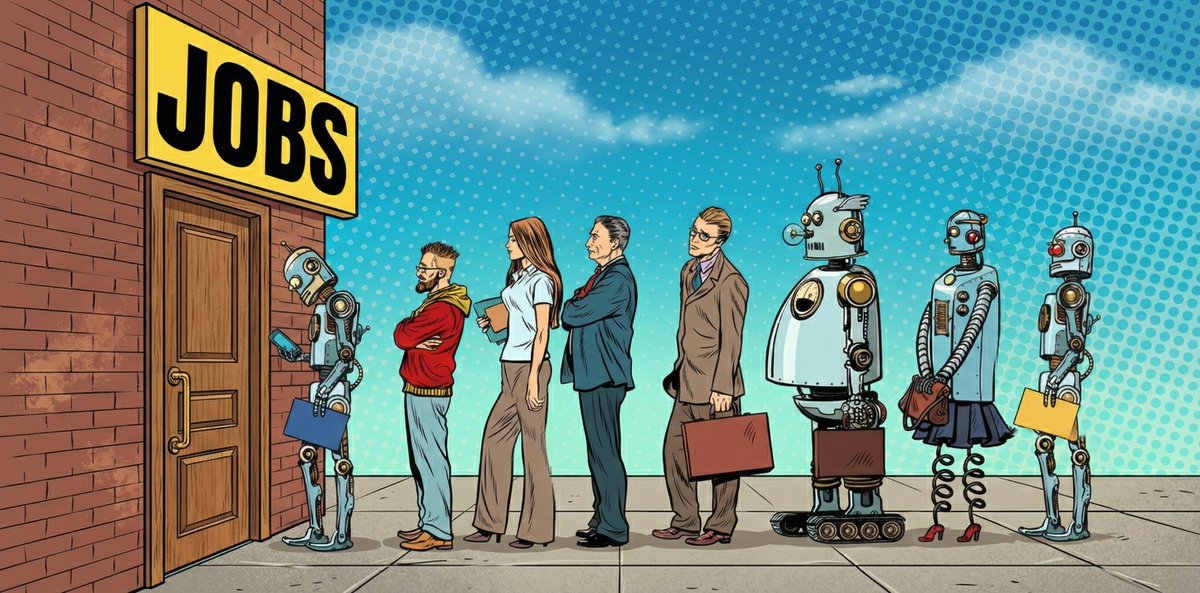
In the UK, tech graduate roles fell 46% in 2024, with projections of another 53% drop by 2026 (IntuitionLabs, 2025). US entry-level postings in software development and data analysis have plummeted, with some data indicating a 67% decrease in junior tech postings. That's not a statistical blip. That's a structural shift.
PwC's UK partner publicly admitted cutting around 200 entry-level jobs in September 2025, explicitly citing AI: generative AI can already perform many duties like drafting reports and reviewing documents that were traditionally given to interns and trainees (Institute for the Future of Work, 2025).
There's a painful irony here. Gen Z workers have the highest AI readiness at 22%, compared to just 6% for Baby Boomers. Yet companies are disproportionately shutting out the cohort most capable of working with AI from the job market by eliminating entry-level positions (HR Digest, 2026).
The Burning Glass Institute tracked a troubling trend: software development entry-level positions dropped from 43% of roles in 2018 to 28% in 2024. Data analysis fell from 35% to 22%. Consulting decreased from 41% to 26% (HR Executive, 2025). These aren't AI-driven layoffs in the traditional sense. It's more subtle: companies aren't firing junior staff, they're just not hiring them.
The long game here is what keeps me up at night, honestly. If we hollow out the bottom of the career ladder, where do tomorrow's senior developers, analysts, and leaders come from? The slow-burning transformation Oxford Economics describes isn't mass unemployment. It's a gradual restructuring of how people enter and progress through careers. That deserves attention even if it's less dramatic than "AI is taking everyone's jobs."
The Australian Picture
Alright, let's bring this home. What does this mean for Australia specifically?
The Jobs and Skills Australia 2025 Occupation Shortage List shows something interesting: the tech talent gap is finally easing. Software engineers, listed as being in shortage every year since 2021, are no longer in shortage in any state or territory (Information Age, 2025). Overall occupation shortages have dropped from 36% in 2023 to 29% in 2025.
That said, the drop isn't because AI replaced everyone. It's because of "a rise in qualified applicants, higher vacancy fill rates, reduced recruitment difficulty, and softer demand" (Jobs and Skills Australia, 2025). Normal labour market dynamics, in other words.
The Jobs and Skills Australia Generative AI Capacity Study painted a nuanced picture. The most vulnerable roles by 2050 include office clerks, receptionists, bookkeepers, and some programming positions. But the study also found AI has "a greater capacity to augment work than automate work," particularly in high-skilled occupations (Information Age, 2025).
Professor Barney Glover, Commissioner of Jobs and Skills Australia, noted that "adaptability will be critical for Australia to realise the potential benefits from AI" rather than focusing on replacement fears (Jobs and Skills Australia, 2025).
For context on what AI is actually doing here: PwC's 2025 Global AI Jobs Barometer found Australian industries most exposed to AI saw three times higher growth in revenue per employee (27%) compared to those least exposed (9%) (PwC Australia, 2025). AI-skilled workers in Australia are commanding a 56% wage premium on average. Job opportunities in AI-exposed industries were up 10%, not down.
There are persistent shortages in areas AI isn't solving: aged carers, teachers, truck drivers, electricians, and childcare workers. As Talent International noted, "these roles will still have fewer candidates than jobs" regardless of AI advancement (Talent International, 2026). The human economy isn't going anywhere.
The cyber security shortage is particularly acute. Australia has roughly 137,000 cyber security professionals but needs an additional 54,000 by 2030 (Australian Computer Society, 2025). AI isn't filling that gap. If anything, AI is creating new security challenges that need human expertise to address.
What Smart Workers Should Actually Do
So what's the practical takeaway here? If the AI panic is overblown but the long-term changes are real, where does that leave someone trying to plan their career?
First, stop catastrophising about next month. The immediate threat isn't as severe as the headlines suggest. Oxford Economics describes this as a "slow-burning transformation," not an overnight disruption. You have time to adapt. Use it.
Second, focus on skills that complement AI rather than compete with it. The Wharton AI researcher Stefano Puntoni made an important observation: "It's great if you can shave 20 minutes off an email or half an hour reading a report. But that's not going to leapfrog anything" (NBC News, 2025). The valuable skills aren't the ones AI does adequately. They're the ones AI does poorly: judgment, creativity, relationship-building, ethical reasoning, navigating ambiguity.
Third, consider what the research says about AI-augmented work. I've written before about how redesigning jobs for AI augmentation, rather than replacement, leads to better outcomes for everyone. The evidence from call centres, software development, and customer service consistently shows that human-AI collaboration outperforms either alone. The workers who'll thrive aren't the ones fighting AI. They're the ones learning to work alongside it.
Fourth, if you're early career, the entry-level squeeze is real and you should plan accordingly. Build demonstrable skills through projects, open source contributions, or freelance work. The traditional "get a graduate role and learn on the job" pathway is narrowing. Employers are looking for evidence you can already do the work.
Fifth, watch for the rehiring wave. Forrester predicts half of AI-attributed layoffs will be reversed. Some of those jobs will come back at lower salaries or in different locations, but some will return to domestic markets as companies realise AI wasn't the magic solution they expected. The Klarna example won't be the last.
Key Takeaways
For Business Leaders:
- Don't use AI as a convenient excuse for workforce decisions. The data shows this approach backfires, with 55% of companies regretting AI-driven layoffs.
- Focus on augmentation over replacement. The productivity gains come from human-AI collaboration, not wholesale substitution.
- Protect your entry-level pipeline. Hollowing out junior roles creates a talent cliff in 5-10 years.
For Workers:
- The immediate AI layoff threat is overblown, with just 4.5% of 2025 job cuts attributed to AI.
- Entry-level positions are genuinely at risk of shrinking. Build demonstrable skills early.
- Skills in judgment, creativity, and human connection will remain valuable even as AI capabilities expand.
For Everyone:
- Don't let headlines drive anxiety. The actual data tells a more nuanced story.
- Long-term structural changes are real, even if the current panic isn't warranted.
- Adaptability beats resistance. Learn to work with AI, not against it.
---
Sources
- Fortune. "AI layoffs are looking more and more like corporate fiction." January 2026. https://fortune.com/2026/01/07/ai-layoffs-conve...
- Workplace Insight. "Evidence of AI-driven job losses remains limited, says Oxford Economics report." January 2026. https://workplaceinsight.net/evidence-of-ai-dri...
- Bureau of Labor Statistics. "Job Openings and Labor Turnover Summary." November 2025. https://www.bls.gov/news.release/jolts.nr0.htm
- Challenger, Gray & Christmas. "2025 Year-End Report." December 2025. https://www.challengergray.com/blog/2025-year-e...
- NBC News. "Tens of thousands of layoffs are being blamed on AI." October 2025. https://www.nbcnews.com/business/business-news/...
- HR Executive. "The AI layoff trap: Why half will be quietly rehired." October 2025. https://hrexecutive.com/the-ai-layoff-trap-why-...
- Reworked. "Klarna Claimed AI Was Doing the Work of 700 People. Now It's Rehiring." 2025. https://www.reworked.co/employee-experience/kla...
- MLQ AI. "Klarna CEO admits aggressive AI job cuts went too far." 2025. https://mlq.ai/news/klarna-ceo-admits-aggressiv...
- The Hill. "US job cuts in 2025 hit 1.17M, highest since COVID." December 2025. https://thehill.com/business/5633232-2025-layof...
- Tech Startups. "Tech Layoffs 2025: Comprehensive List and Trends." October 2025. https://techstartups.com/2025/10/28/tech-layoff...
- Information Week. "Tech company layoffs: The COVID tech bubble bursts." 2025. https://www.informationweek.com/it-leadership/t...
- Wolf Street. "Low-Fire Low-Hire Job Market." December 2025. https://wolfstreet.com/2025/12/04/low-fire-low-...
- The Street. "Fed Chair Jerome Powell says AI isn't the main source of labor market woes." December 2025. https://www.thestreet.com/investing/fed-chair-j...
- Stanford Digital Economy Lab. "Canaries in the Coal Mine." August 2025. https://digitaleconomy.stanford.edu/wp-content/...
- IntuitionLabs. "AI's Impact on Graduate Jobs: A 2025 Data Analysis." 2025. https://intuitionlabs.ai/articles/ai-impact-gra...
- Institute for the Future of Work. "The impact of AI on entry-level jobs." 2025. https://www.ifow.org/news-articles/the-impact-o...
- HR Digest. "The truth behind AI layoffs in 2026." 2026. https://www.thehrdigest.com/are-you-next-the-tr...
- Rezi AI. "The Crisis of Entry-Level Labor in the Age of AI." 2026. https://www.rezi.ai/posts/entry-level-jobs-and-...
- Information Age (ACS). "There's no shortage of software engineers in Australia anymore." 2025. https://ia.acs.org.au/article/2025/there-s-no-s...
- Jobs and Skills Australia. "Occupation Shortage List." 2025. https://www.jobsandskills.gov.au/data/occupatio...
- Information Age (ACS). "Aussie jobs most vulnerable to AI outlined in govt study." 2025. https://ia.acs.org.au/article/2025/aussie-jobs-...
- Jobs and Skills Australia. "Generative AI Capacity Study Report." 2025. https://www.jobsandskills.gov.au/publications/g...
- PwC Australia. "AI-fuels fourfold productivity gains." June 2025. https://www.pwc.com.au/media/2025/pwc-2025-glob...
- Talent International. "Australia's hiring market: 2026 workforce outlook." 2026. https://www.talentinternational.com/blog/austra...
---