

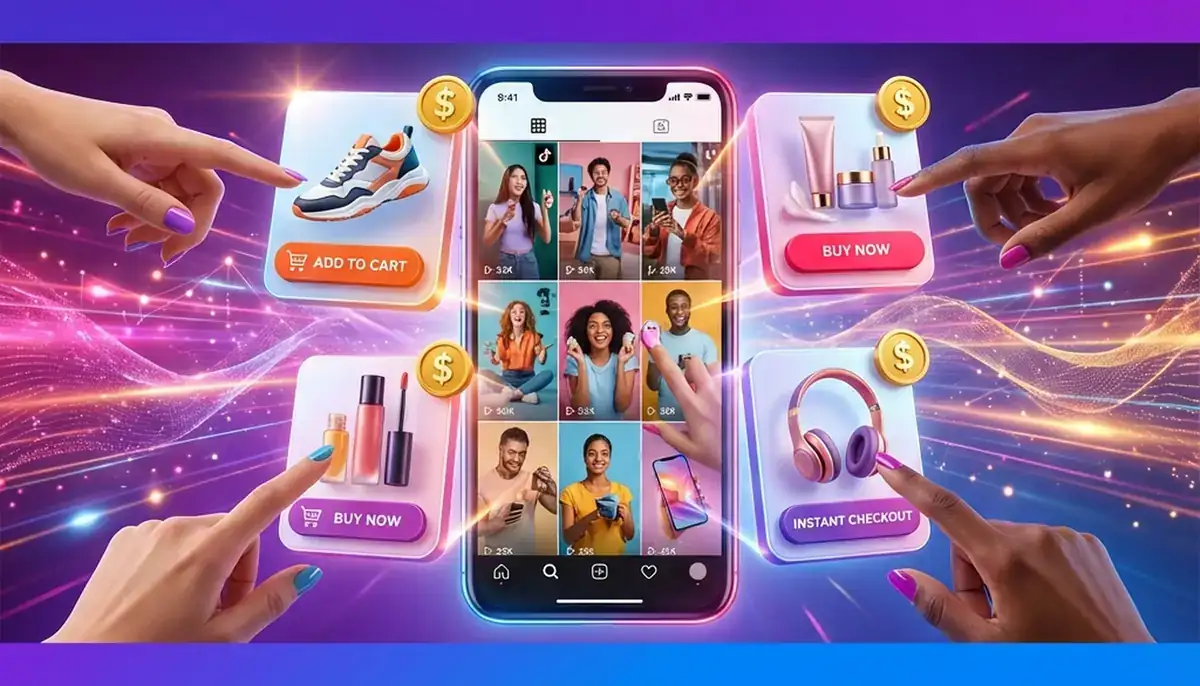
Remember when social media was just for sharing holiday photos and arguing about politics? Those days are over. Australians have transformed their Instagram scrolls and TikTok binges into full-blown shopping sessions, and the numbers tell a remarkable story.
According to recent data from Oxford Economics, 38% of Australian TikTok users purchase products recommended on the platform at least once a month. When you factor in other platforms like Instagram, Facebook, and emerging players, we're looking at roughly 42% of Australians making monthly purchases through social media channels. That's nearly half the population turning their social feeds into shopping carts.
And here's the thing: this isn't a passing trend. It's a fundamental shift in how Australians discover, evaluate, and buy products. With TikTok Shop poised to launch fully in Australia by late 2025, retailers who aren't paying attention are about to miss the boat entirely.
TikTok Shop Arrives Down Under
If you haven't been following the social commerce space, TikTok Shop might sound like just another shopping feature. It's not. TikTok Shop represents the most significant disruption to Australian retail since smartphones made mobile commerce mainstream.
ByteDance, TikTok's parent company, quietly registered the "TikTok Shop" trademark in Australia mid-2024, signalling serious intent. While the platform has already launched successfully in the UK, US, and Southeast Asia, Australia's rollout is expected to be complete by late 2025. Early adopters are already testing the waters, and the results have been impressive.
Fashion retailer Princess Polly has been leading the charge. Their team now goes live up to five days a week on TikTok Shop, driving serious results through consistent broadcasting, creator partnerships, and real-time product launches. When they implemented TikTok's Search Ads feature, they saw a 350% increase in purchase value and 80% improvement in cost per acquisition compared to standard campaigns.
That's not luck. That's understanding where your customers actually spend their time.
The Numbers Don't Lie
Australia's social commerce market hit $3.76 billion in 2025, growing at 19.8% annually. By 2030, analysts project it'll reach $8.58 billion. To put that in perspective, sales through social networks will represent over 17% of total online sales in 2025.
But raw numbers only tell part of the story. What's really interesting is who's driving this growth and how they're shopping.
Nearly 80% of Gen Z and Millennials now integrate social media into their shopping journey, according to Bazaarvoice's 2025 Shopper Preference Report. Almost half of them shop or browse products on social media weekly, with 80% doing it at least monthly. Fashion remains the top category, but beauty, electronics, and home goods aren't far behind.
Here's where it gets interesting: in 2023, 58% of Australian social shoppers used Facebook for purchases, making it the most popular social commerce platform. Instagram came in second at 40%, with YouTube at 44%. But the real action is happening with younger demographics on TikTok, where discovery-driven shopping is changing the game completely.
Platform Wars: Where Aussies Actually Shop
Each platform serves a different purpose in the social commerce ecosystem, and smart retailers are learning to play to each platform's strengths.
Facebook remains the heavyweight champion for established businesses. With over 21 million Australian users, it's where Millennials still feel most comfortable making purchases. Facebook Marketplace has become particularly popular for second-hand goods and local sales, creating a parallel economy that traditional retailers can't ignore.
Instagram is the visual playground where aspiration meets transaction. Roughly 14 million Australians engage with Instagram, spending an average of 11 hours and 46 minutes on the platform monthly. Instagram Shopping has made the platform shoppable, letting users buy directly from posts and stories. The key? Instagram excels at lifestyle-driven purchases where aesthetics matter.
TikTok is the wild card that's rewriting the rules entirely. With 38% of Australians aged 18 and over using the platform, TikTok has proven that entertainment-driven commerce can outperform traditional advertising. Products go viral overnight, trends emerge from nowhere, and the #princesspollyhaul hashtag has accumulated over 250 million views.
The difference? On Instagram, you're selling a lifestyle. On TikTok, you're creating a movement.
AI: The Silent Sales Assistant
Behind every product recommendation, every perfectly timed ad, and every "you might like this" suggestion sits artificial intelligence working overtime to predict what you'll buy next.
AI-powered personalisation can increase e-commerce revenue by up to 25% and boost customer retention by 40%, according to research from Rapid Innovation. Even more impressive: nearly 35% of Amazon's revenue comes from AI-driven product recommendations.
For Australian retailers, this technology is no longer optional. It's the baseline expectation. When 48% of customers report they'll spend more when they receive tailored recommendations, you can't afford to show everyone the same generic product catalogue.
But AI's influence extends beyond recommendations. Dynamic pricing algorithms now adjust prices in real time based on demand, competitor pricing, and individual customer behaviour. Research indicates that dynamic pricing can lead to a 25% increase in revenue for e-commerce businesses.
That said, there's a darker side emerging. Personalised pricing uses your browsing history, purchase habits, device type, and even your postcode to predict your willingness to pay, researchers at UNSW warn. When two people see different prices for the same product based on their personal data, questions about fairness and transparency become unavoidable.
Australian Success Stories Worth Studying
Forget the Silicon Valley startups for a moment. Some of the most compelling social commerce stories are happening right here in Australia.
Showpo started in founder Jane Lu's garage and has grown into a fashion powerhouse generating over $30 million annually, shipping to 100 countries. Their secret? Building a social-first community that feels more like friends than customers. They don't just sell clothes; they've created a movement.
Koh, the eco-friendly cleaning brand, went from a Bondi garage project to a social media sensation with international reach in just three years. Their success came from understanding that modern consumers don't just want products. They want brands that align with their values, and they discovered those brands through social media.
The broader economic impact is substantial. TikTok alone generated $1 billion in direct revenue for Australian businesses and contributed $1.1 billion to Australia's GDP in FY23, supporting nearly 13,000 jobs. That's real economic value from platforms some people still dismiss as "just for kids dancing."
What This Means for Australian Retailers
If you're running an Australian retail business and you're not actively experimenting with social commerce, you're falling behind. Here's what you need to know:
Platform selection matters. You don't need to be everywhere, but you need to be where your customers actually are. Gen Z skews heavily toward TikTok and Instagram. Millennials, who'll account for 33% of global social commerce spending by 2025, prefer Facebook and Instagram. Know your audience, then commit to doing those platforms well.
Content is commerce now. The line between entertainment and shopping has completely blurred. TikTok Shop's click-to-buy features drive 27% of product discovery, meaning your content needs to educate, entertain, and convert simultaneously. If your social media strategy still treats content and sales as separate functions, you're doing it wrong.
Creator partnerships aren't optional anymore.Nearly 56% of Gen Z and Millennials have purchased products based on creator recommendations, with health, beauty, and apparel leading the way. The catch? Authenticity matters more than follower count. Micro-influencers with engaged communities often outperform celebrities with millions of followers.
AI integration is table stakes. If you're not using AI for product recommendations, personalised content, and dynamic pricing optimisation, your competitors probably are. AI-driven personalised shopping experiences drive an average of 44% of repeat purchases worldwide.
Live commerce is coming. It's already massive in China, it's growing fast in the US, and Australia's next. Princess Polly's five-day-a-week live stream schedule isn't excessive; it's forward-thinking. Live shopping creates urgency, builds community, and converts browsers into buyers in real time.
The Regulatory Reality Check
Before you dive headfirst into social commerce, there's one significant development you need to know about. In November 2024, Australia announced a ban on social media for children under 16, covering TikTok, Facebook, Instagram, and X (but exempting YouTube). The law takes effect in late 2025.
For retailers, this means your youngest potential customers are getting cut off from major platforms. While this protects children, it also means businesses need to focus even more intensely on the 18-plus demographic. The good news? That's where the purchasing power sits anyway.
The Window Is Closing
Here's the uncomfortable truth: the window for easy entry into social commerce is closing fast. Early adopters like Princess Polly and Showpo built their audiences when organic reach was still possible and competition was minimal. Today's social media landscape is more crowded, more competitive, and more expensive to navigate.
But it's not too late. Not yet.
The Australian e-commerce market hit $56.07 billion in 2024, with over 17 million Australians shopping online monthly. That's nearly 64% of the population clicking "add to cart" regularly. The customers are there. The platforms are maturing. The infrastructure is proven.
What's missing is businesses willing to treat social commerce as a core sales channel rather than a marketing afterthought.
Approximately 53% of Australian consumers engage in social shopping activities, spending an average of over two and a half hours daily on social platforms. Your potential customers are already there, scrolling, watching, and discovering. The only question is whether they'll discover your products or your competitors'.
What's Next
TikTok Shop's full Australian launch will be a watershed moment. Retailers who've been testing the waters will scale aggressively. Brands that have ignored social commerce will suddenly realise they're years behind. And consumers? They'll continue doing exactly what they're already doing: discovering products through entertainment, making purchases without leaving their favourite apps, and expecting increasingly personalised, seamless experiences.
The businesses that thrive in this new landscape won't be the ones with the biggest marketing budgets. They'll be the ones that understand social commerce isn't about selling on social media. It's about building communities, creating genuine value, and meeting customers where they already spend their time.
42% of Australians are already buying through social media. The question isn't whether social commerce will become mainstream. It already has. The question is whether your business will be ready when TikTok Shop fully arrives and the competition heats up even further.
The shift has happened. Now it's your move.
---
Sources
- The socio-economic impact of TikTok in Australia | Oxford Economics
- TikTok Shop Australia 2025: The E-commerce Gold Rush Is Coming | Hive Hub Collective
- How Aussie retailers can prepare for TikTok Shop's inevitable launch | Inside Retail
- TikTok For Business Case Study: Princess Polly
- Australia Social Commerce Market Intelligence Report 2025-2030 | Globe Newswire
- Australian Social Media Usage By Platform & Age In 2025 | Clickify
- Gen Z and Millennials lead in social commerce trends | Bazaarvoice
- Social Media Statistics for Australia [Updated 2025] | Meltwater
- Social media statistics shaping Australia's digital landscape in 2025 | Sprout Social
- Australian TikTok statistics to inform your strategy in 2025 | Sprout Social
- How Princess Polly supercharges their best customers with a mobile app | Tapcart
- AI Product Recommendations in Retail and E-Commerce | Rapid Innovation
- How AI is shaping dynamic pricing | Lumenalta
- AI is using your data to set personalised prices online | UNSW
- AI-Driven Personalization is Boosting E-commerce Conversions | Anavara Digital
- Success Stories: How These Aussies Made it Big in E-commerce | Click Start Digital
- Oxford Economics Report: TikTok Effect | TikTok Newsroom
- 2025 Social Commerce Trends | DHL eCommerce
- 2025 Trends: Harnessing Gen Z, Social Commerce, and AI | Upfluence