

Here's something you don't see every day: a smart glasses product that people actually want to buy. Not just tech enthusiasts or early adopters. Regular people.
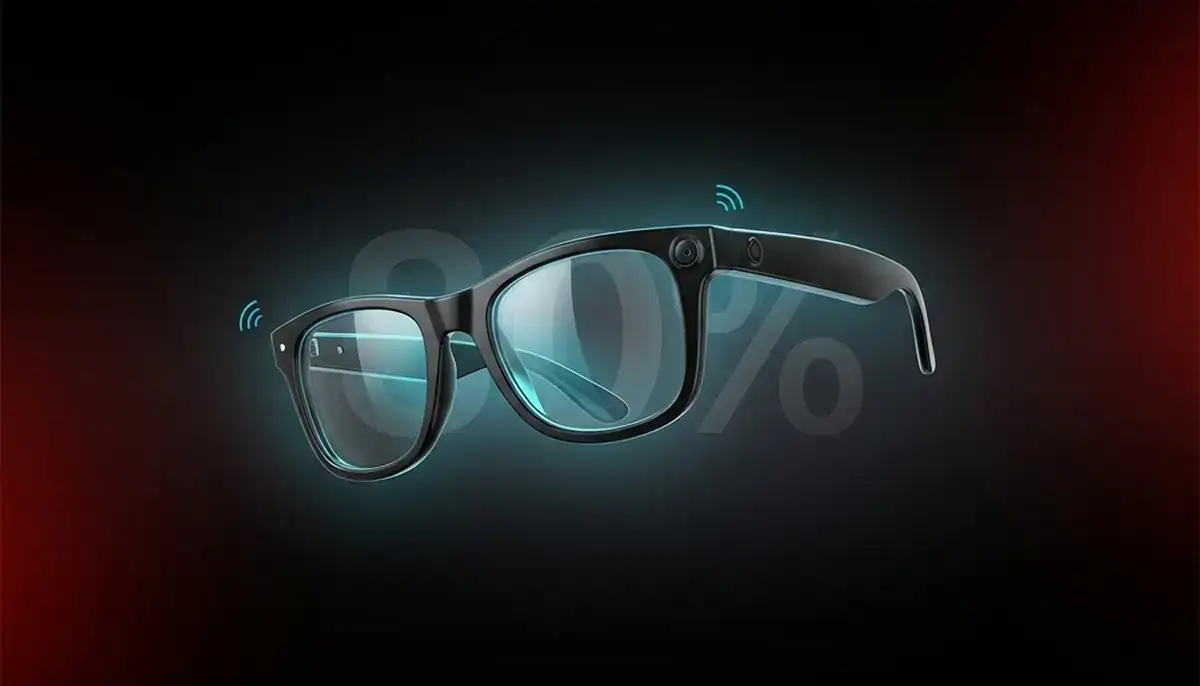
Ray-Ban Meta smart glasses aren't just selling well. They're absolutely dominating the market, capturing 73% of global smart glasses shipments in H1 2025. That's not a typo. Nearly three out of every four smart glasses sold worldwide are Ray-Ban Metas.
For Australian businesses watching the wearable tech space, this isn't just interesting market data. It's a signal that smart glasses have finally crossed the chasm from "weird tech toy" to "useful everyday tool." Let's unpack why that matters and what changed.
The Numbers Tell a Story
The smart glasses market grew by 210% year-over-year in 2024, surpassing 2 million units for the first time. Ray-Ban Meta glasses drove most of that growth. In the first half of 2025 alone, their shipments increased over 200% year-over-year.
Counterpoint Research projects the market will maintain a compound annual growth rate exceeding 60% through 2029. That's the kind of growth curve that makes investors drool and businesses pay attention.
IDC's data reinforces this trend. They report that worldwide shipments of AR/VR headsets combined with smart glasses are expected to grow 39.2% in 2025, reaching 14.3 million units. Smart glasses will drive most of that growth, with the category expanding 247.5% during the year.
Here's what makes these numbers particularly interesting: they're happening during a period when the broader VR market is contracting. While traditional VR headsets face declining interest, smart glasses are taking off. That tells you something about what people actually want from wearable tech.
What Makes Gen 2 Different
If you've been paying attention to wearable tech for the past decade, you've probably developed some healthy scepticism. We've seen plenty of overhyped products that promised to revolutionise how we interact with the world, only to end up collecting dust in drawers.
Ray-Ban Meta Gen 2 glasses are different. Here's why.
They Look Like Normal Glasses
This might seem obvious, but it's the most important feature. These glasses look like Ray-Ban Wayfarers because they are Ray-Ban Wayfarers. You can't tell someone's wearing smart glasses unless you're looking for the tiny LED indicator.
Wikipedia notes that the glasses maintain Ray-Ban's classic design aesthetic while integrating technology inside the frames. That's a completely different approach from previous attempts at smart glasses, which screamed "I'm wearing tech on my face."
In Australia, you can pick them up at OPSM, Sunglass Hut, or JB Hi-Fi for around $599 AUD. They're available in Wayfarer, Skyler, and Headliner styles. Want prescription lenses? No problem. Polarised or photochromic? They've got you covered.
The Camera Actually Works Well
The Gen 2 glasses pack a 12MP camera, a massive upgrade from the 5MP sensor in Gen 1. Photos come out at 3024 x 4032 pixels, formatted in portrait orientation. That's perfect for Instagram Stories, TikTok, or any vertical video platform.
Video quality has improved dramatically too. According to Moor Insights & Strategy's review, the glasses capture 1920 x 1440 video compared to the previous generation's 780p output.
The real magic is in how easy it is to capture content. You're not fumbling with your phone. You're not missing the moment while you get your camera ready. You just say "Hey Meta, take a photo" or press the button on the frame.
Audio Quality Surprises People
The five-microphone array captures spatial audio with impressive accuracy. Digital Trends' review notes that the glasses register voice commands even when you're mumbling or whispering in noisy environments.
Laptop Mag's review points out that with five microphones (up from two in Gen 1), voice quality on calls is clear and centred. The glasses handle crowded environments well, filtering background noise effectively.
The speakers use open-ear technology. You can hear music, podcasts, or phone calls without blocking ambient sounds. That's safer for activities like cycling or walking in traffic. Battery life supports up to 5 hours of continuous audio or 5.5 hours of phone calls.
Meta AI Integration Makes Them Useful
Here's where things get interesting for business applications. The glasses run on a Qualcomm Snapdragon AR1 Gen1 processor and integrate Meta AI for multimodal input via computer vision.
What does that actually mean? You can point your glasses at text in another language and ask Meta AI to translate it. Look at a plant and ask what species it is. See a landmark and get information about it. The AI processes your requests using both the camera feed and voice input.
In April 2024, Meta updated the AI to enable multimodal input, meaning the glasses can "see" what you're looking at and provide contextual information. This moves smart glasses beyond simple camera functionality into genuine augmented intelligence.
The glasses are lightweight too. At just 48 grams, you barely notice you're wearing them. They've got IPX4 water resistance, so you don't need to baby them in light rain or around splashes.
Why Google Glass Failed But Ray-Ban Meta Succeeded
The comparison is inevitable. Google Glass launched in 2013 with massive hype and died a quiet death by 2015. Ray-Ban Meta glasses are thriving. What changed?
Price Point
Google Glass cost $1,500 for early adopters. That's luxury gadget territory for something with limited functionality. Ray-Ban Meta glasses start at around $450 AUD in Australia. That's expensive for sunglasses but reasonable for tech that replaces several devices.
The price difference matters. At $1,500, Google Glass needed to revolutionise your life to justify the cost. At $450, Ray-Ban Metas just need to be useful enough to wear regularly.
Privacy Design
Google Glass sparked immediate backlash over privacy. The visible camera made people uncomfortable. Bars, restaurants, and workplaces banned them. The term "Glasshole" emerged to describe wearers.
Ray-Ban Meta glasses address this differently. There's a small LED indicator that lights up when recording. The camera isn't constantly visible. The glasses look normal enough that they don't trigger the same privacy anxiety.
Is this a perfect solution? No. Privacy concerns around wearable cameras remain valid. But the execution is significantly better than Google's approach.
Fashion First, Tech Second
Google Glass looked strange. The design featured a prominent display and camera cube that made wearers stand out awkwardly. It wasn't sleek, stylish, or discreet.
Ray-Ban Meta took the opposite approach. Partner with a fashion brand people already trust. Use existing frame styles people already wear. Hide the tech as much as possible. The result is glasses you'd wear even without the smart features.
Clear Use Cases
Google Glass struggled to define compelling use cases for average consumers. The technology was impressive, but people couldn't figure out why they needed it in their daily lives.
Ray-Ban Meta glasses nail the basics. Capture photos and videos hands-free. Take phone calls. Listen to music. Use AI assistance. These aren't revolutionary features, but they're useful. They solve real problems people have every day.
Business Applications Australian Companies Should Consider
Beyond consumer use, smart glasses are finding traction in enterprise applications. Australian businesses are starting to explore how these devices can improve productivity and training.
Remote Assistance and Expert Support
Smart glasses enable remote experts to provide real-time guidance to field workers. Instead of sending senior technicians to every job site, companies can keep experts centrally located while supporting multiple teams simultaneously.
ENGIE Services used smart glasses to shorten training time for young technicians. When junior staff encounter problems, they connect with senior experts who see exactly what they see, assess the situation, and provide guidance. This transfers knowledge faster than traditional training methods.
For Australian companies with distributed workforces, this approach reduces travel costs and maximises expert utilisation. It's particularly valuable for industries like mining, utilities, and telecommunications where expertise is concentrated but work sites are scattered.
Documentation and Quality Assurance
First-person video capture has obvious applications in documentation and compliance. Technicians can record procedures hands-free, creating training materials or evidence of work completed.
Session recording supports quality assurance and provides verifiable documentation for compliance audits. For regulated industries, having visual records of processes and procedures reduces disputes and improves accountability.
Training and Skills Transfer
AR glasses offer immersive training experiences by overlaying instructions onto real-world environments. Employees practice complex procedures in safe, controlled settings, leading to quicker skill acquisition and reduced training costs.
TotalEnergies has implemented AR smart glasses to assist field workers maintaining refinery equipment. Lockheed Martin uses them for assembling aerospace components, with workers receiving real-time digital instructions that reduce errors and improve precision.
With live visual collaboration, less-experienced technicians gain on-the-job training from seasoned experts. Over time, this reduces skills gaps and builds more capable workforces.
Content Creation
For marketing teams and content creators, smart glasses offer unique first-person perspectives that are difficult to capture with traditional cameras. The hands-free nature makes it easier to document processes, create tutorial content, or capture authentic behind-the-scenes footage.
Australian businesses creating video content for social media, training, or marketing can leverage the glasses' 12MP camera and improved video quality without expensive camera rigs or dedicated videographers.
The Australian Market Opportunity
Ray-Ban Meta glasses are readily available across Australia through major retailers. Pricing starts at $599 AUD for Gen 2 models, with Gen 1 models occasionally available at discounted prices.
The Meta View app required to manage the glasses is supported in Australia, along with features like Meta AI integration. This puts Australian businesses and consumers on equal footing with other major markets.
For businesses considering smart glasses, the ecosystem has matured significantly. Integration with platforms like Microsoft Teams, Zoom, and enterprise software is improving. Companies like Zoho offer dedicated smart glasses software for remote assistance workflows.
What's Coming Next
Meta isn't standing still. They've announced Ray-Ban Display glasses launching for around $800 AUD this year. These add a heads-up display and pair with a forearm Neural Band for gesture control, enabling direct AR overlays and phone-free navigation.
Meanwhile, competitors are entering the market. Counterpoint Research notes that over nine new AI smart glasses models launched by January 2025, primarily from Chinese manufacturers. Xiaomi, Samsung, and ByteDance are all developing competing products.
This competition will drive innovation and likely push prices down over time. That's good news for businesses looking to deploy smart glasses more broadly across their organisations.
Hitachi Construction Machinery announced in March 2025 that they've developed XR smart glasses that are watertight and dustproof, designed specifically for industrial environments. As use cases expand, we'll see more specialised devices targeting specific industries and applications.
Should Your Business Care?
If you're in an industry that relies on field service, technical expertise, or hands-on training, smart glasses deserve serious evaluation. The technology has matured past the experimental phase into practical utility.
Start by identifying specific problems smart glasses could solve. Don't buy the technology and then look for uses. That's backwards. Instead, examine your workflows and ask where hands-free access to information, remote expert guidance, or first-person documentation would create value.
Look for integration opportunities with your existing tools. Check compatibility with your CRM, communication platforms, and enterprise software. The easier smart glasses fit into current workflows, the faster you'll see adoption and ROI.
Consider starting with a pilot programme. Equip a small team working on well-defined use cases. Track key performance indicators like task completion time, error rates, and efficiency improvements. Use that data to evaluate whether broader deployment makes sense.
The Ray-Ban Meta success story tells us that wearable AI has finally found product-market fit. The question isn't whether smart glasses will become mainstream. Based on current growth trajectories, that's inevitable. The question is whether your organisation will be ahead of the curve or playing catch-up.
For Australian businesses, now's a good time to start paying attention.
Sources
- Counterpoint Research: Global Smart Glasses Shipments Soared 110% YoY in H1 2025
- Counterpoint Research: Ray-Ban Meta Smart Glasses Drive Global Smart Glasses Market Surge in 2024
- IDC Blog: The Rise of Smart Glasses, From Novelty to Necessity
- Ray-Ban Meta - Wikipedia
- Moor Insights & Strategy: Ray-Ban Meta Smart Glasses Review
- Ray-Ban: Discover Ray-Ban Meta AI Glasses Specs & Features
- Digital Trends: Ray-Ban Meta Review
- Laptop Mag: Ray-Ban Meta Smart Glasses Review
- Medium: Meta Ray-Bans Gen 1 vs Gen 2 Full Review and Comparison
- OPSM: New Ray-Ban Meta AI Glasses Gen 2
- Medium: Why Google Glass Failed - Importance of Product-Market Fit
- StartupTalky: Google Glass Failure Case Study
- Tactyqal: Why Did Google Glass Fail?
- Cognitive Market Research: Google Glass - A Futuristic Vision That Failed
- Iristick: Remote Assistance with Smart Glasses
- Ortmor Agency: 5 Exemplary Use Cases of AR Smart Glasses in Enterprise Settings
- Vuzix: Field Service Solutions
- Zoho Lens: AR Smart Glasses Software for Remote Assistance
- The Intellify: How Meta Ray-Ban Display Glasses Work
- Hitachi Construction Machinery: New XR Smart Glasses Developed for Remote Site Support
- UC Today: The Best Smart Glasses for Business
- InnovateEnergy: Boosting Productivity with AR Smart Glasses
- Road to VR: Meta Unveils Ray-Ban Smart Glasses with Display